Receivers for 20 or 1,000 delegates.
Delegates get a headset, choose a language and hear the interpreter. We handle hand-out, charging, counting and collection, so the break does not become a queue.
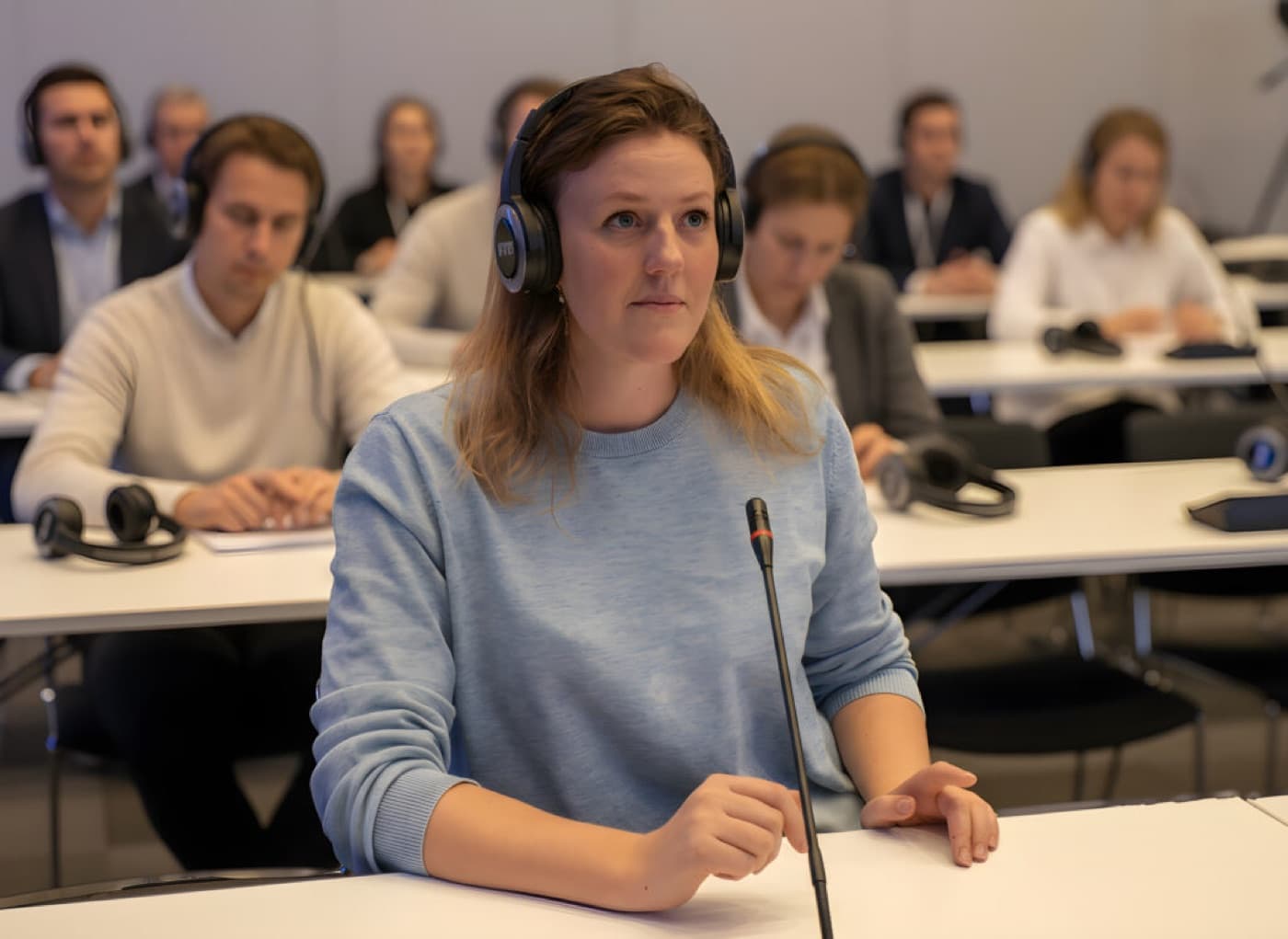
Receivers are what the delegates hold. They choose a channel and hear the interpreter. A booth is needed when the interpreter must sit sound-isolated. Many meetings only need receivers and a transmitter.
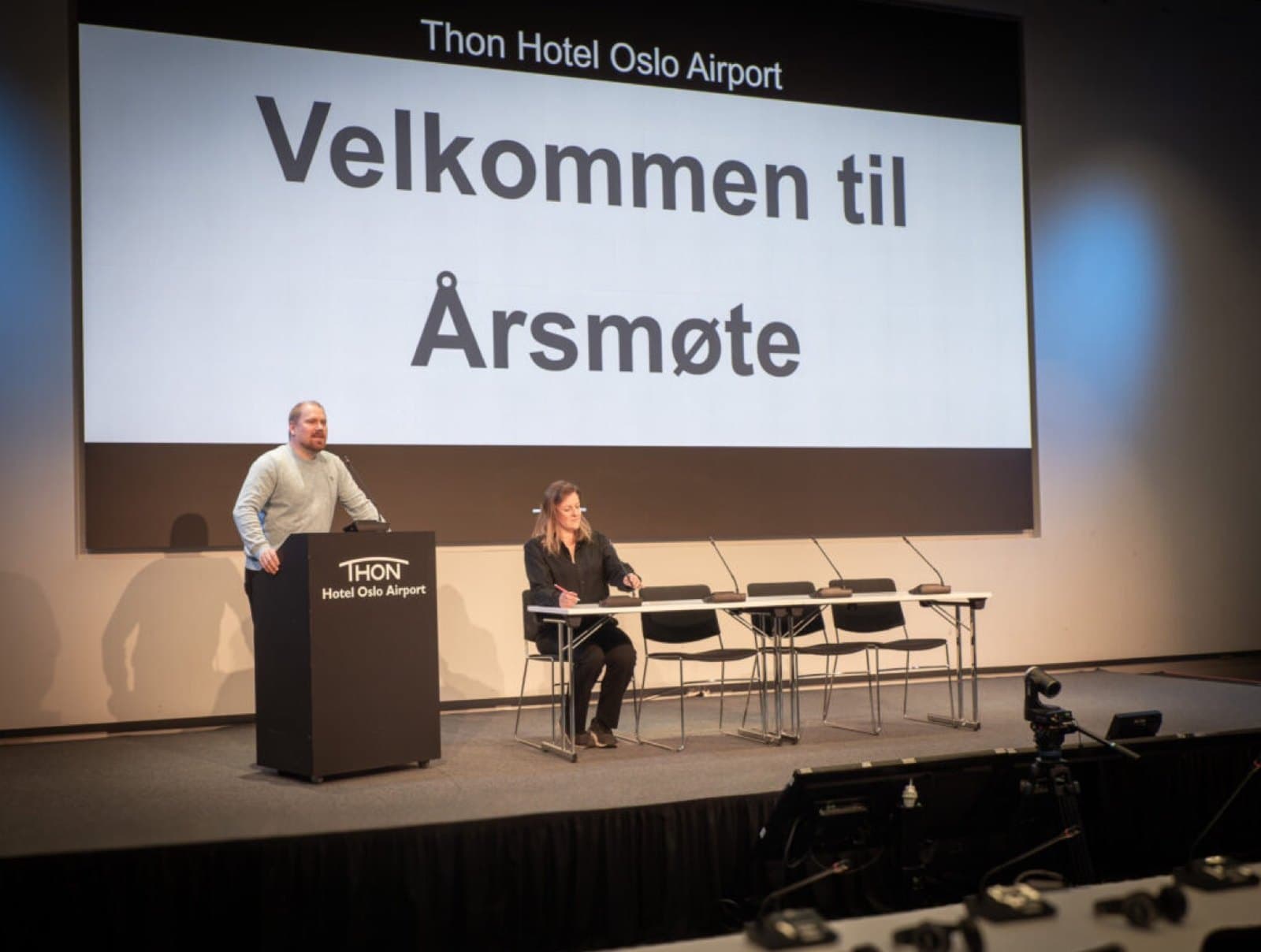
With 400 receivers, the breaks are the hard part. The batches were ready beforehand, a technician handed them out, and we collected them at the exit. The same thinking applies whether it is 20 or 1,000.
What is included
- A receiver with a discreet earpiece or a headset
- Charging before hand-out
- Hand-out and collection, with a count
- Spare units
- An IR panel or a UHF transmitter for the room
- A technician through the meeting
Specifications
| IR | Line of sight. Stops at the wall. What is said stays in the room. |
|---|---|
| UHF | Through walls. Suits large and awkward halls. |
| Channels | 8–64 |
| Scale | From small meetings to 1,000 headsets at one conference |
400 receivers, and no queue in the breaks
Delegates collected and returned a receiver without a queue in the breaks.
Questions
Can we hire receivers only, without a booth?
Yes. A booth is needed when the simultaneous interpreter must sit sound-isolated. Receivers and a transmitter are enough when the interpreter already has a place, or when a group only needs to hear a guide.
Tell us about the meeting
Place, date, languages and roughly how many delegates are enough to start.