What ISO 4043 actually guarantees
ISO 4043 is the international standard for mobile interpreter booths — the ones brought into a venue rather than built into it. Booths built to it are not simply boxes with a window. The standard covers what interpreters need in order to work accurately for hours at a time.
- Acoustic separation both ways. The booth keeps the interpreter's voice in, so the room and the neighbouring booth do not hear it, and keeps the room out, so the interpreter hears a clean source.
- Ventilation with sufficient air exchange. Two people, closed doors, a full day. Without proper air handling, concentration drops long before the programme ends.
- Sightlines to the speaker and the screen. Interpreters read the room. Who takes the floor, what is on the slide, whether someone is pointing at a figure.
- Working space and lighting. Room for documents, a laptop and two interpreters who need to hand over to each other without disruption.
How many booths do you need?
The rule is simple: one booth per target language. A conference held in English with interpretation into Norwegian, French and Arabic needs three booths, not one.
Each booth normally seats two interpreters who alternate — simultaneous interpretation is too demanding to sustain alone for a full session. That is a staffing question rather than an equipment one, but it affects the size of booth you need.
When languages cannot be covered directly
With many languages in the same room, combinations appear that no single interpreter covers — Norwegian to Amharic, for instance. The solution is relay: one interpreter takes the source into a shared pivot language, and the others work from that.
Technically this requires interpreters to be able to select which channel they listen to, and it requires the channel plan to be settled before rigging begins. We have written about how this works in practice in the article on interpreter booths at an international parliamentary conference.
What is included in a booth delivery
- Booth assembly and dismantling — we build it, you do not
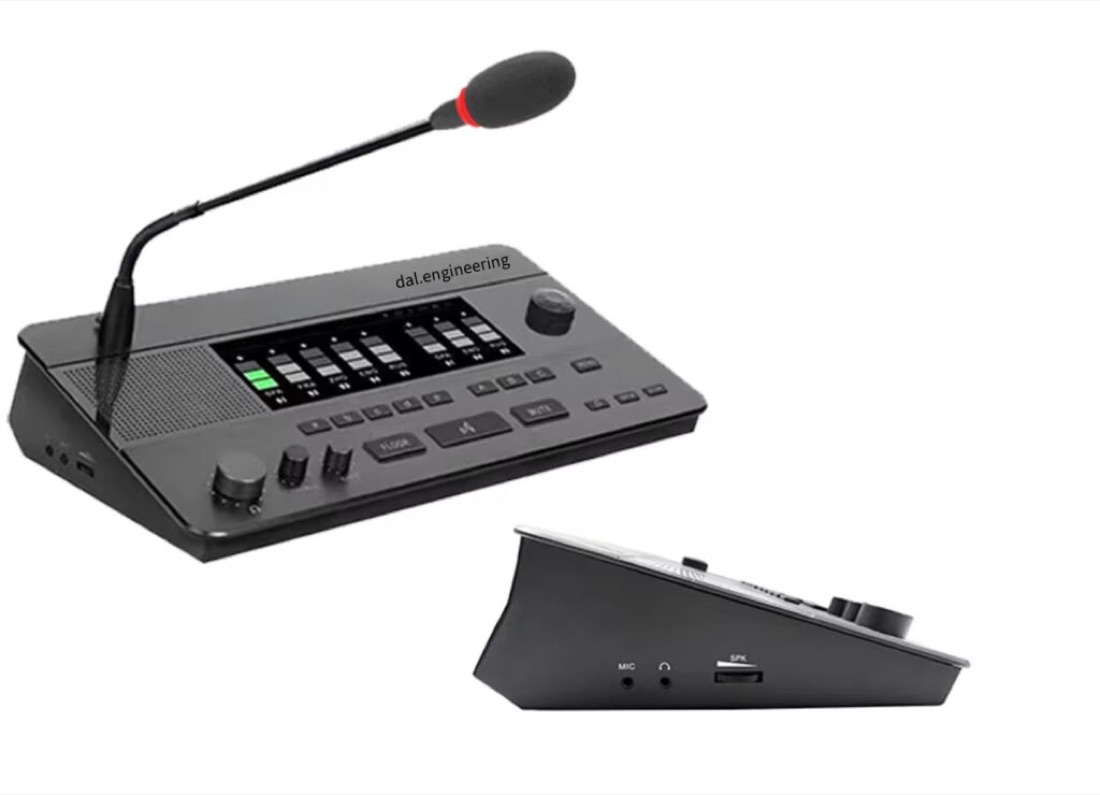
- Interpreter consoles with channel selection, microphone and relay capability
- Headsets for the interpreters
- Receivers and headsets for the audience — see interpretation equipment
- A technician on site for the duration, not only during setup
- A technical run-through with the interpreters before the programme starts
Practical considerations in Norwegian venues
Two things catch international organisers out more often than anything else.
Floor space and access. A booth needs a footprint at the back or side of the room with a clear view forward, and it has to get in through the doors. Older Norwegian venues — and there are many beautiful ones — sometimes have narrow access or protected interiors that limit where anything can be placed. This is what a venue survey resolves.
Power. Booths, consoles, transmitters and charging all need circuits that exist and can take the load. It is rarely a problem, but it is always worth confirming rather than discovering.
Related
For receivers, headsets and distribution to the audience, see interpretation equipment. If you are organising in the capital, interpretation equipment in Oslo covers the venues we work in most often. Questions about invoicing, VAT and lead times are answered in the FAQ for international organisers and the note on Norwegian VAT.
Need booths for an event in Norway?
Tell us the date, the venue, the number of delegates and the language pairs — we will send a complete quote. We reply in English within one business day.
Request a quote